Manual Handling Train the Trainer - The spine
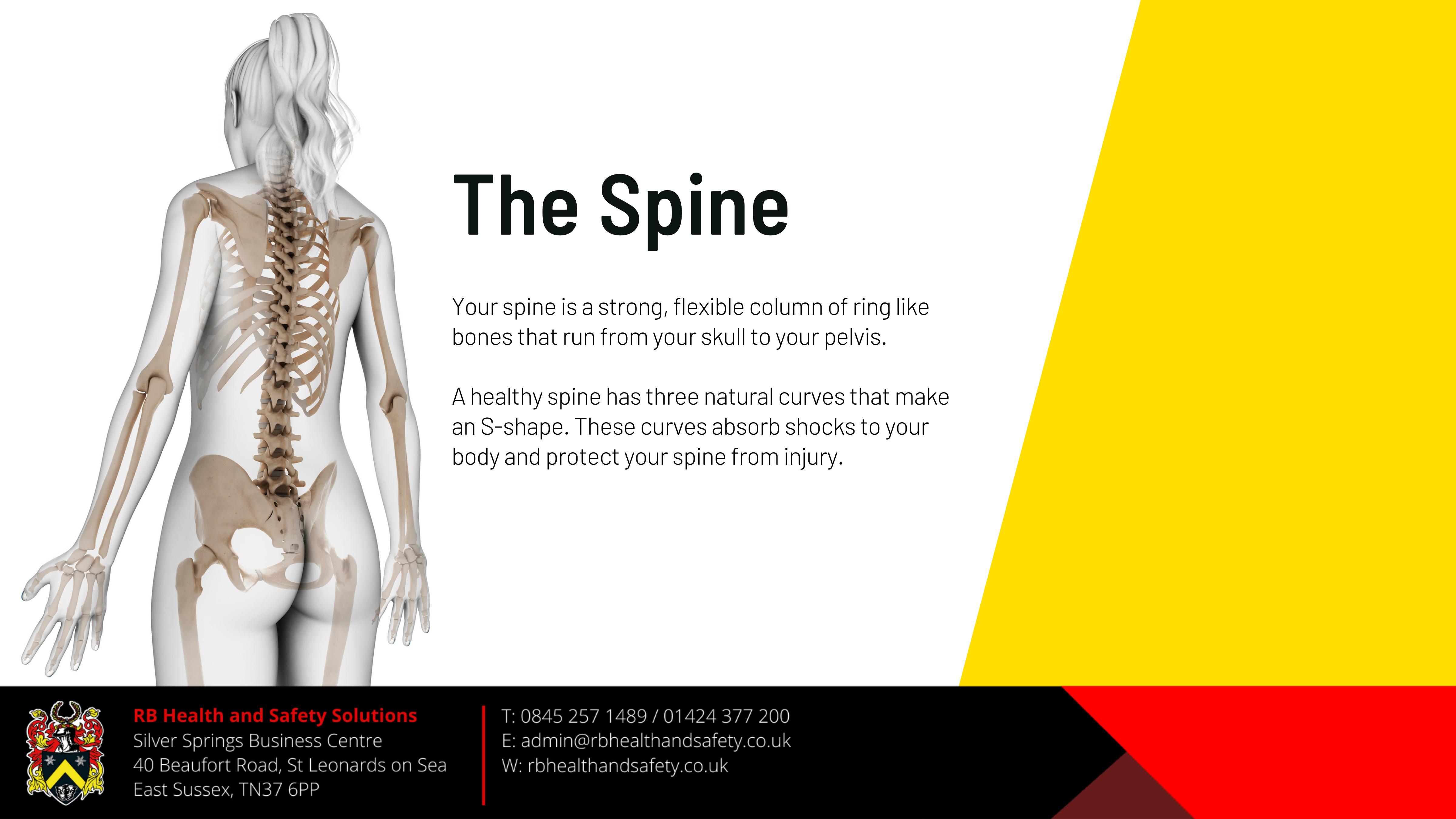
Notes - Your spine, or backbone, is your body's central support structure. It keeps us upright and connects different parts of your musculoskeletal system such as our head, chest, pelvis, shoulders, arms and legs. Your spine helps you sit, stand, walk, twist and bend. Although the spine is made up of a chain of bones, it is flexible due to elastic ligaments and spinal disk
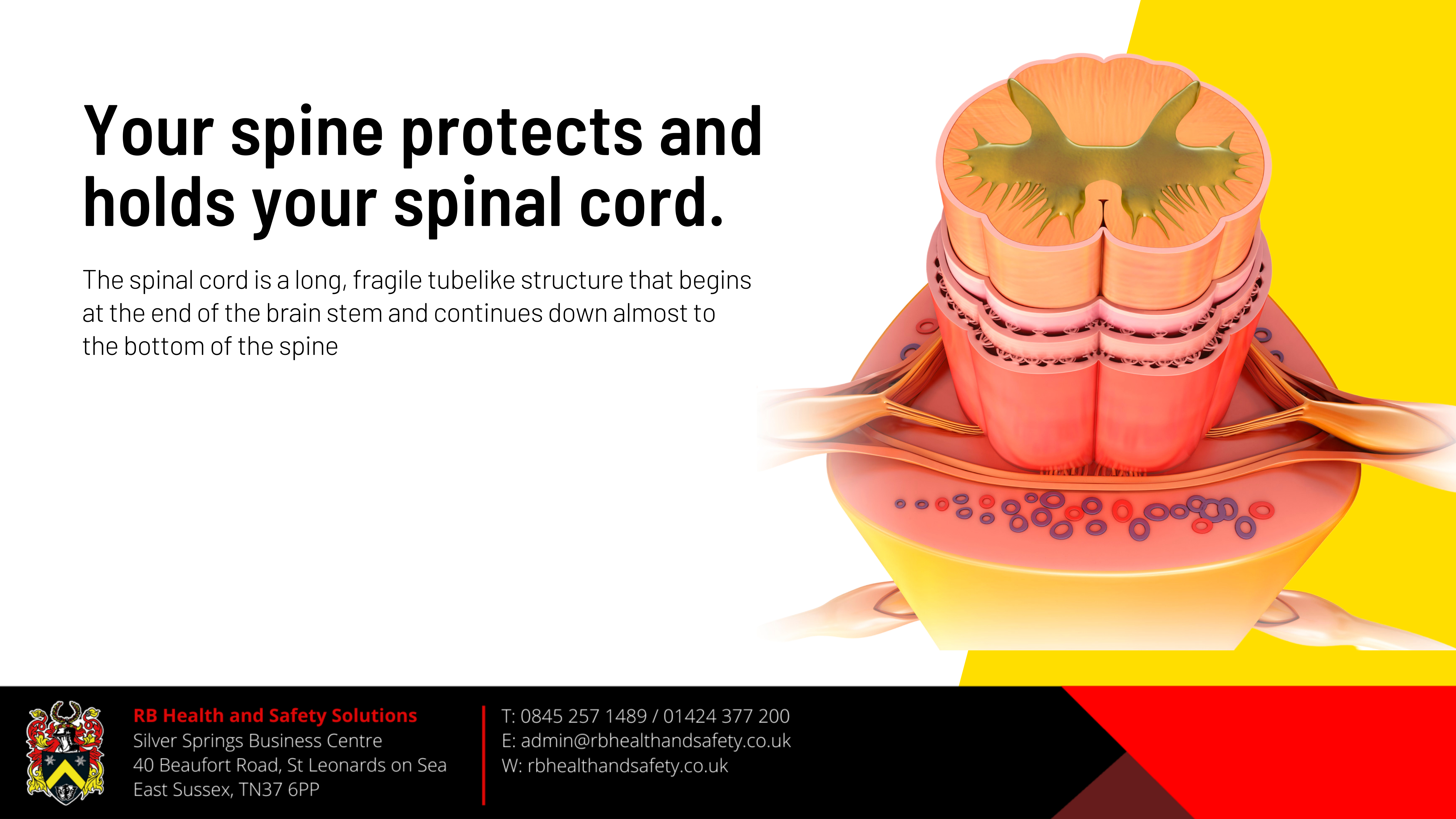
Notes - Your spinal cord is a a vital aspect of the central nervous system. It is a column of nerve tissue that runs from the base of the skull down the centre of the back. It is covered by three thin layers of protective tissue called membranes. The three primary roles of the spinal cord are to send motor commands from the brain to the body, send sensory information from the body to the brain, and coordinate reflexes.

Notes - Vertebrae are the small circular bones that form the spine of a human being or animal. The vertebrae protect and support the spinal cord, they also bear the majority of the weight put upon your spine. The spine has 33 stacked vertebrae that form the spinal canal. You have 24 upper vertebrae and 9 lower fused vertebrae.

Notes - The intervertebral discs provide cushioning between vertebrae and absorb pressure put on the spine. They allow movement between adjacent vertebral bodies, absorb shock, and transmit loads through the vertebral column. They are complex structures that consist of a thick outer ring of fibrous cartilage termed the annulus fibrosus, which surrounds a more gelatinous core known as the nucleus pulposus.